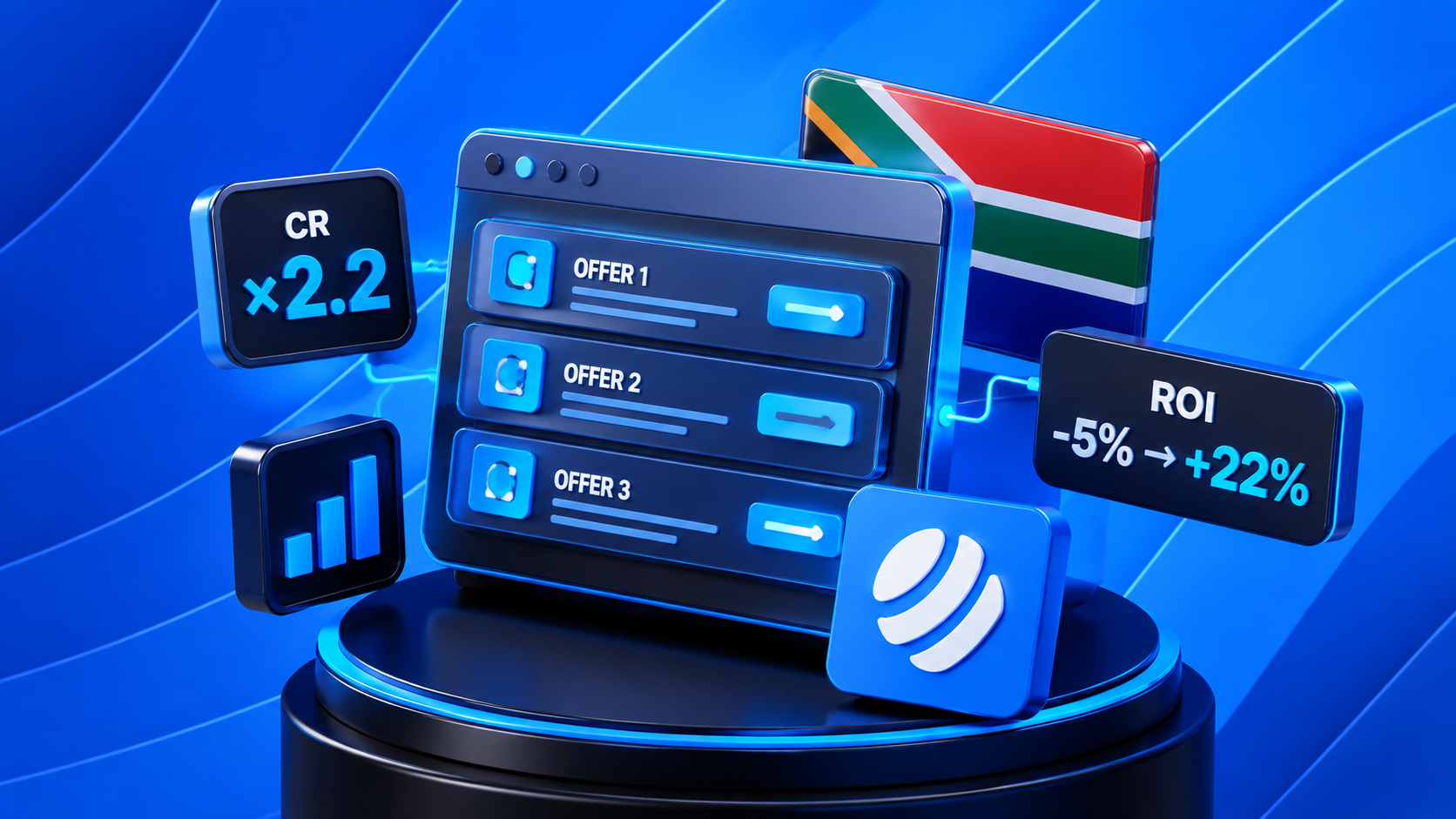
A TDS rule split the traffic by connection quality and a lightweight offerwall cut the page’s dead weight — every $1,000 of ad spend went from a $50 loss to $220 in profit.
Geo: South Africa
Vertical: Payday / quick loans
Source: Facebook Ads
LeadCore tools used: offerwall builder + TDS (traffic split)
Test: A/B 50/50, 2 weeks, identical budget and audience
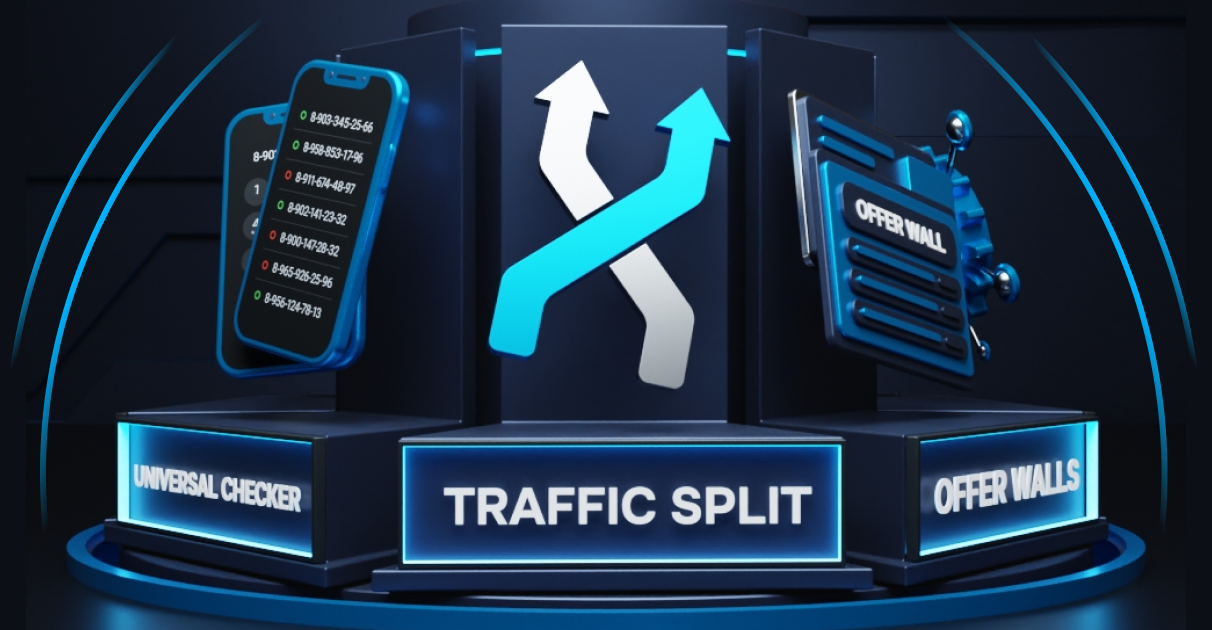
Both tools are part of LeadCore — the free toolkit inside every Leadgid account that lets affiliates build their own infrastructure without code: an offerwall (landing) builder, TDS for traffic splitting, smart links, A/B tests, a link shortener and a phone checker.
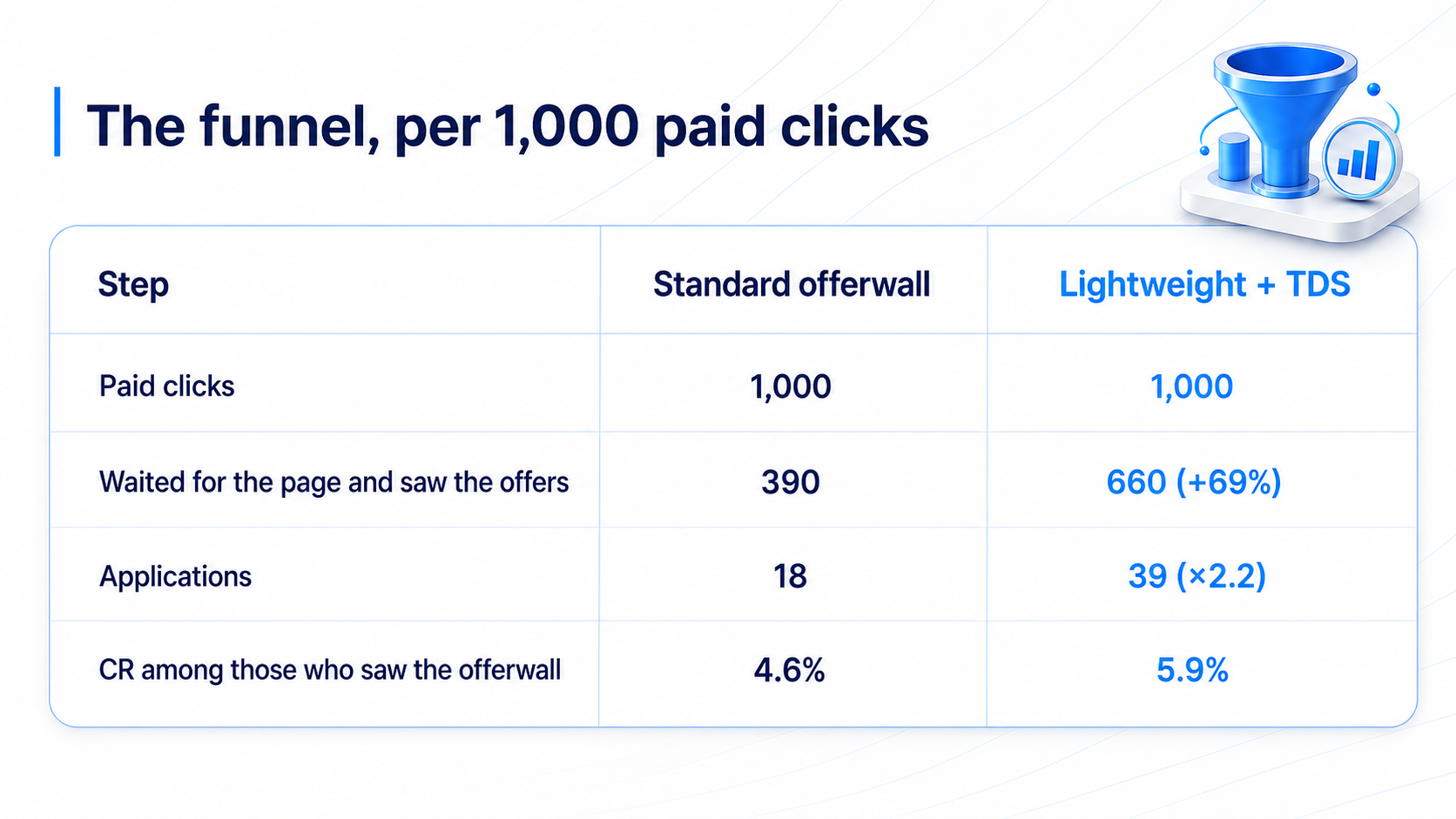
The money was leaking at one specific step: click → offerwall actually seen.
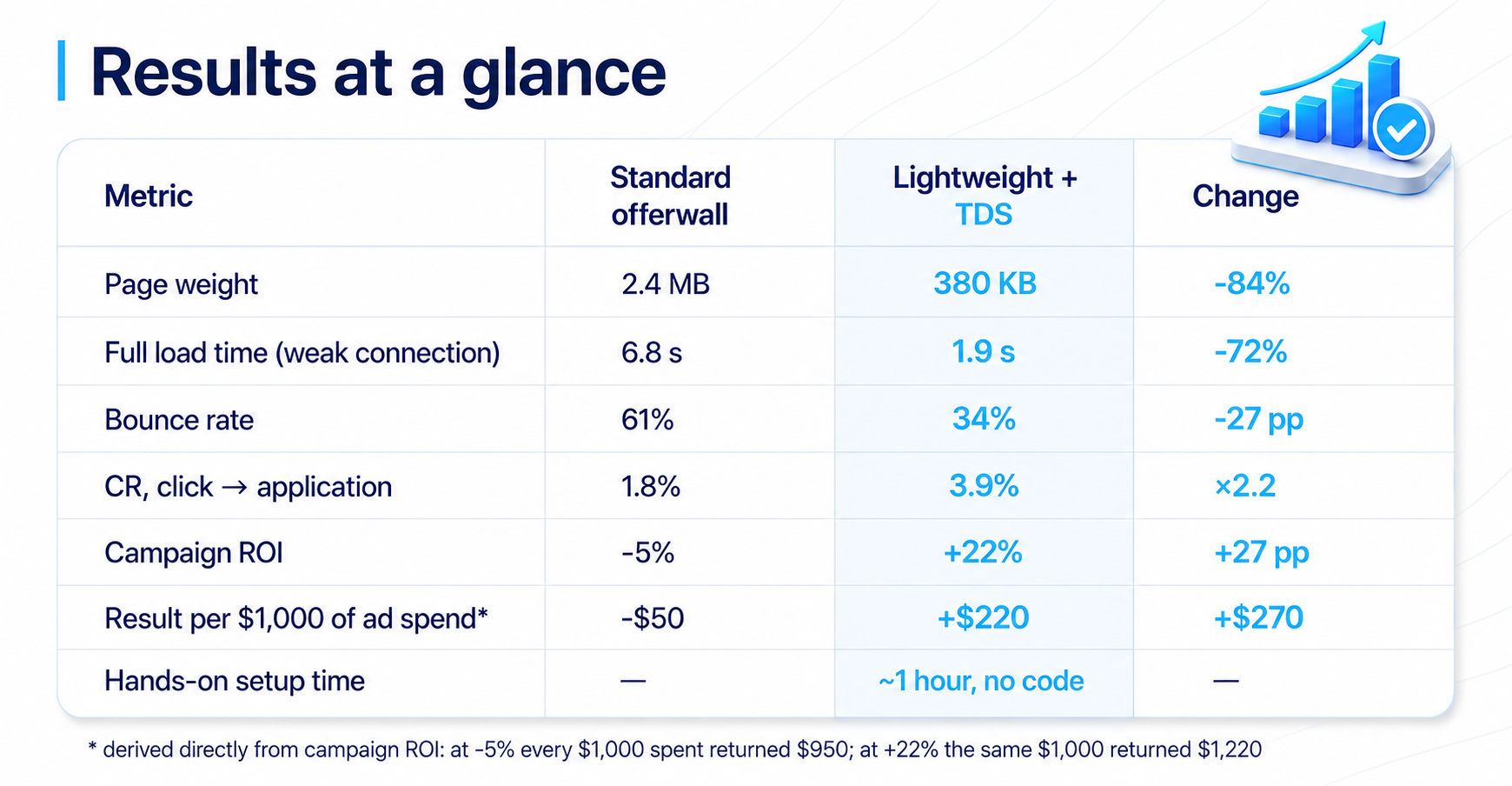
On the heavy page, 610 of every 1,000 paid clicks bounced before the offers rendered. The lightweight version recovered 270 of those views — and even among users who did see the page, conversion improved (4.6% → 5.9%), because a fast page gets people to the application form with less friction.
The problem
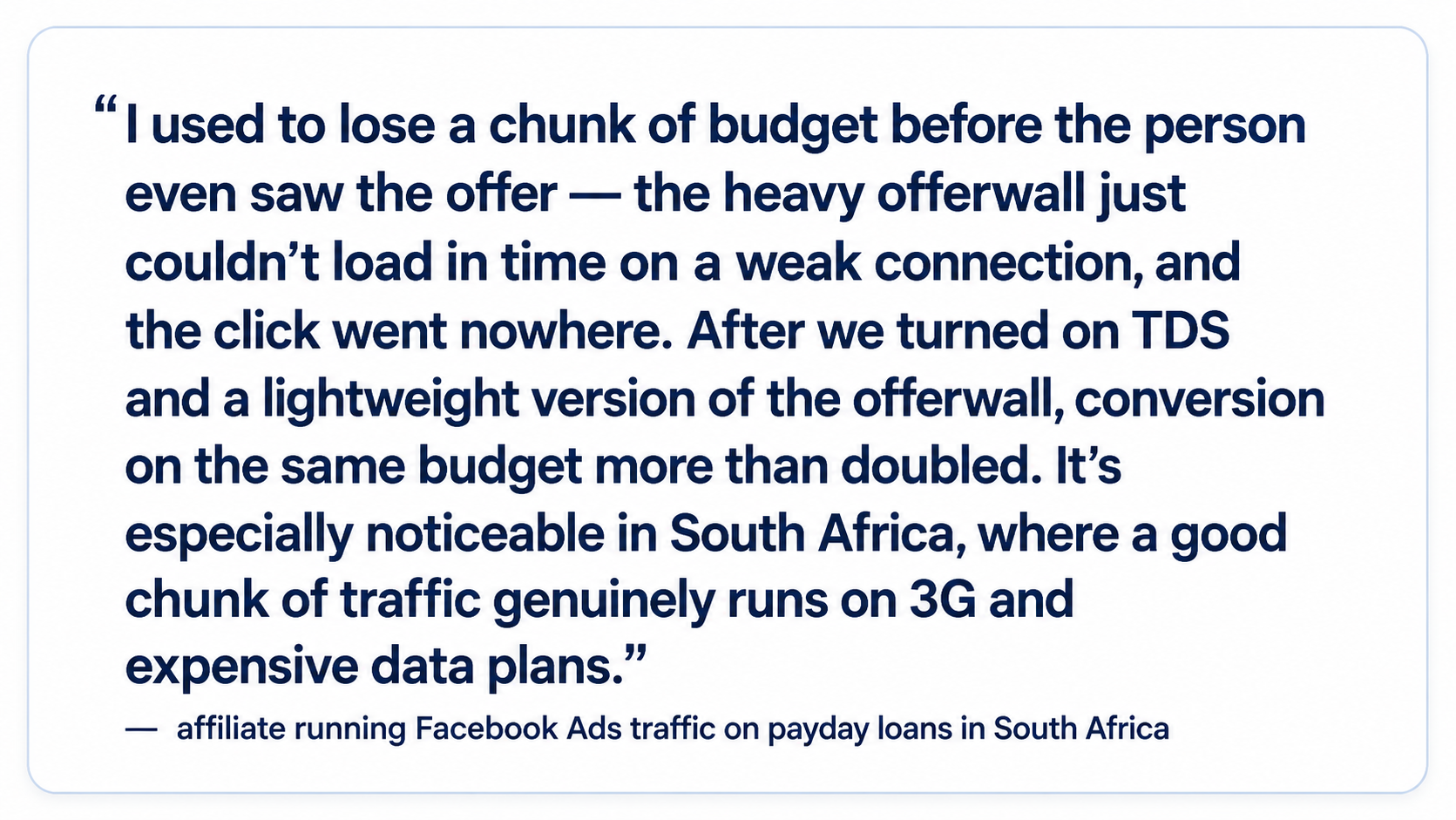
A large share of the payday audience in South Africa browses on budget Android phones with metered data plans — much of the traffic arrives over a weak 3G/LTE connection. The standard offerwall — an offer carousel, provider images, animation — weighed 2.4 MB and took 6.8 seconds to fully load on a weak connection.
A click on a financial-vertical ad on Facebook is expensive, and 61% of paid clicks bounced before the page finished loading: the user closed the tab without seeing a single offer.
What we did — all inside LeadCore, no code
1. Launched a Facebook Ads campaign targeting South Africa with the same budget and audience (a look-alike based on past conversions).
2. Used LeadCore’s TDS to detect the connection quality and device class of each user who clicked the ad.
3. Assembled a lightweight version of the offerwall in the LeadCore builder: compressed images, no video background or animation, a static offer list — 380 KB instead of 2.4 MB, with the same offer pool and EPC-based sorting.
4. Split traffic 50/50 via TDS: part of the clicks went to the standard offerwall, part to the lightweight one, with every other campaign setting kept identical.
5. Tracked both versions for two weeks in LeadCore stats: load time, bounce rate, click-to-application conversion and ROI.
Setup time: about one hour, zero code
The whole setup took roughly an hour of hands-on work: ~40 minutes to assemble the lightweight offerwall in the LeadCore builder and ~15 minutes to configure the TDS rule that routes weak connections to it. No developer, no hosting, no extra spend — versus the usual 2–3 days and $200–300 for a custom-coded landing page. All LeadCore tools are free for Leadgid affiliates.
Where exactly the profit shows up
The cost per click doesn’t change, and neither does the offer or the payout per lead. The difference happens between a “paid click” and a “click that actually saw an offer”: on the heavy showcase, 61% of already-paid clicks never got to the offers — a pure loss. On the lightweight version the same spend buys the same clicks, but 69% more of them reach the offerwall — so the same budget produces 2.2× the applications.
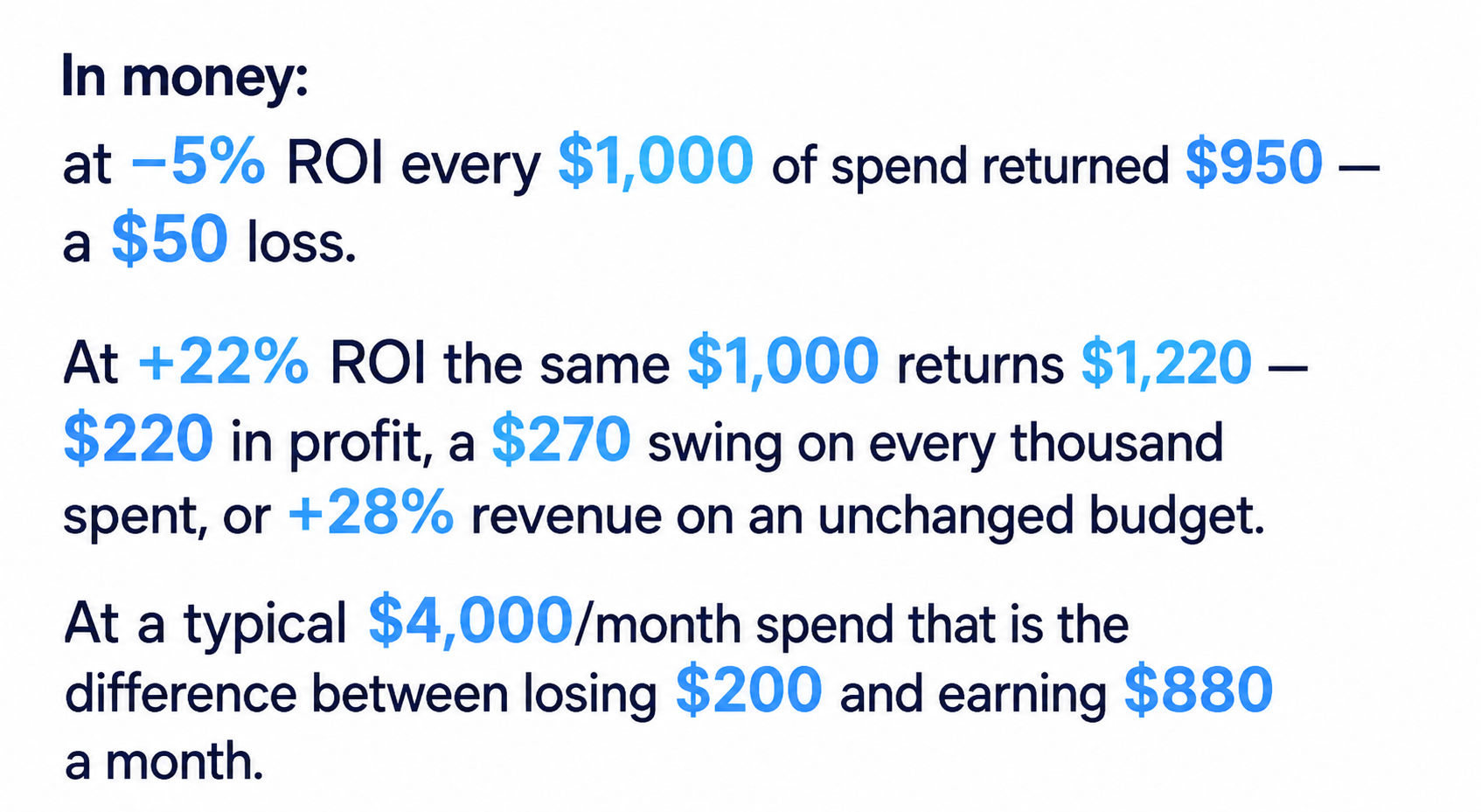
One honest nuance: CR doubled while ROI grew by 27 points rather than doubling — the recovered users sit on weaker connections and cheaper devices and approve somewhat below average. Even so, that segment alone flipped the whole campaign from loss-making to +22%.
What happened next
After the test, the lightweight offerwall became the default for all South African traffic via the same TDS rule, with the rich showcase kept only for fast connections. The campaign has stayed at a positive ROI since, and the affiliate scaled the budget instead of fighting the page.
Takeaway for affiliates
In payday verticals on emerging geos, page weight isn’t a minor technical detail — it’s another filter eating into your own budget. Before fine-tuning the offer mix:
• Check what devices and connection quality your traffic actually runs on in each geo.
• Keep a lightweight offerwall as the default for weak connections via TDS — not as an experimental fallback.
• Re-test page weight before re-testing offers: in geos with weak mobile infrastructure it often moves ROI more than any offer fine-tuning.
Want the same setup? Register at Leadgid and open LeadCore — the offerwall builder, TDS, smart links and A/B tests are free for our affiliates. Your manager will help you clone this configuration in under an hour.