
Loan CPA offers that allow SEO traffic exist, but permission is offer-level. Get it in writing, route all organic clicks through a compliant pre-lander (eligibility, fees/timelines, disclosures), and win organic + AEO by shipping topic hubs (pillars + FAQs), tight structured data, and a fast, clean technical stack that makes approvals—and therefore EPC—go up.
Key takeaways
- Build a hub → pillar → spoke model around loans/cards/repair; every page leads to a pre-lander.
- Use concise FAQs, definitions, and comparison tables to feed AEO answers; keep claims promise-free.
- Prove real-world trust (authors, sources, edits).
- Technical wins compound: fast pages, correct hreflang, clean sitemaps, IndexNow, and llm.txt access guidance.
- Track Organic SEO as a cohort in your partner dashboard (Approvals → EPC), not just rankings.
Can I use SEO for loans? (policy & scope)
When exploring loan CPA offers that allow SEO traffic, it’s important to understand that search-driven promotion in the finance vertical is heavily regulated and varies by offer-level permissions. Some lenders and affiliate networks welcome SEO-based traffic — especially content-led, educational, or intent-driven formats — while others restrict it entirely or only allow it under strict brand and disclosure rules. Always confirm the allowed channels, brand term usage, and deep-linking policies directly with your affiliate manager before launching.
Treat SEO as a compliance-first channel: build trust through transparent content, include required disclosures, and always direct users through a compliant pre-lander that explains eligibility, costs, and timelines before they reach the lender’s page. Avoid promise-based or misleading copy like “instant” or “guaranteed approval.” Instead, use responsible phrasing such as “Check eligibility” or “Subject to lender approval.” Keep written confirmations, screenshots of approvals, and archived policy notes — your audit trail matters as much as your rankings.
Ship a compliant SEO hub — Start on Leadgid.
Architecture — how to structure the site
When building a content framework for loan SEO or any site promoting finance affiliate offers, your architecture should balance compliance, crawlability, and conversion flow. A clear structure helps both search engines and users understand how topics connect — and it keeps your SEO traffic aligned with lender policies. Think of your site as a guided map for intent: users should always move logically from education → eligibility → offer comparison → compliant pre-lander.
Treat your setup as site architecture for finance affiliates:
- Hub: “Loans & Credit” (indexable landing).
- Pillars: Loan Affiliate 101, Credit & Cards, Routing (repair/secured/builder), Channel Playbooks (Email/Social/SEO), Benchmarks/EPC.
- Spokes: GEO pages (ES/MX/PH/IN/KZ), “vs” comparisons, tool/tutorial pages, reviews, and micro-FAQs.
Wire it cleanly for loan SEO:
- Top navigation should link hubs and pillars, with breadcrumb trails for every page.
- Within each pillar, link to sibling spokes and always back to the hub to reinforce topical authority.
- Use canonicals on a single, definitive URL per topic — and eliminate orphan pages to ensure every post is connected to your core funnel.
[pic] Hub → pillar → spoke diagram
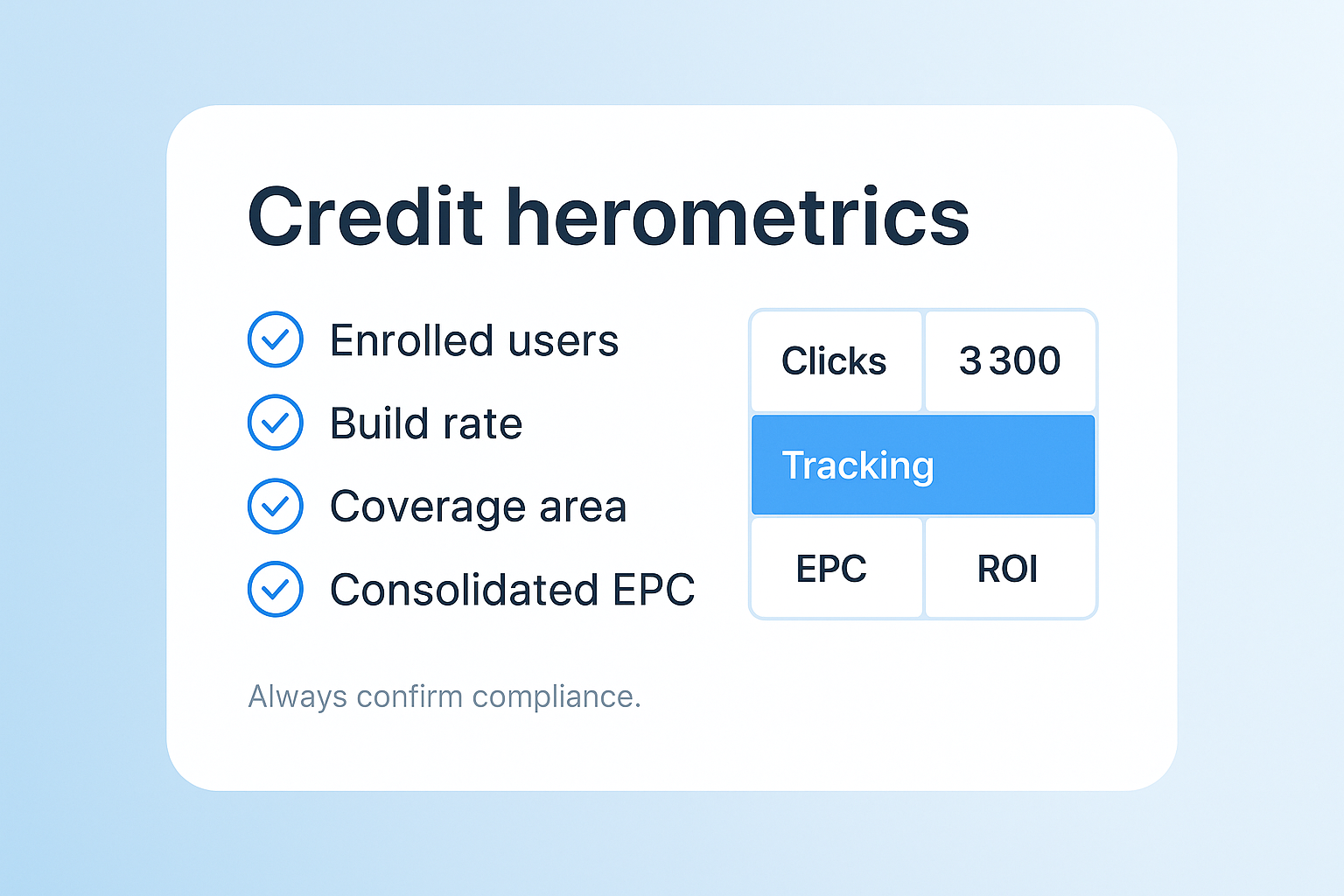
Need schema/hreflang help? We’ll review your architecture, add JSON-LD, and wire IndexNow + llm.txt.
Pillars & content plan
Anchor the site with pillar pages for loan affiliates and fill gaps with a loan affiliate seo content plan:
- Each page ships with: TL;DR, eligibility/fees/timelines block, comparison table if relevant, 5–8 Q&A items, CTA → pre-lander, and links to related pages.
- For AEO, make questions natural (“How do approvals work?”), answers short, and terms defined.
Schema & AEO signals
Use structured data for finance affiliates to make content machine-readable:
Required JSON-LD per template
- Article (all long-form), BreadcrumbList (all), FAQPage (pages with Q&A), ItemList (tables/comparisons), Organization (site-wide), WebSite (sitelinks).
Article + Breadcrumbs example
<script type="application/ld+json">
{
"@context":"https://schema.org",
"@type":"Article",
"headline":"Loan Affiliate Marketing: Offers, Networks & Traffic Rules",
"author":{"@type":"Person","name":"Your Author"},
"dateModified":"2025-09-12",
"mainEntityOfPage":{"@type":"WebPage","@id":"https://cpa.leadgid.com/learn/loan-affiliate/"},
"publisher":{"@type":"Organization","name":"Leadgid"}
}
</script>
<script type="application/ld+json">
{
"@context":"https://schema.org",
"@type":"BreadcrumbList",
"itemListElement":[
{"@type":"ListItem","position":1,"name":"Learn","item":"https://cpa.leadgid.com/learn/"},
{"@type":"ListItem","position":2,"name":"Loan Affiliate Marketing","item":"https://cpa.leadgid.com/learn/loan-affiliate/"}
]
}
</script>
FAQ block example (use targeted, short answers; see per-page FAQs you already have for #1–#14):
<script type="application/ld+json">
{
"@context":"https://schema.org",
"@type":"FAQPage",
"mainEntity":[
{"@type":"Question","name":"How do loan approvals work?",
"acceptedAnswer":{"@type":"Answer","text":"Approvals depend on lender assessment of eligibility and documents. Use a pre-qualification page and clear fees/timelines."}}
]
}
</script>
ItemList for a comparison page (e.g., “Leadgid vs Others”):
<script type="application/ld+json">
{
"@context":"https://schema.org",
"@type":"ItemList",
"itemListElement":[
{"@type":"ListItem","position":1,"name":"Leadgid"},
{"@type":"ListItem","position":2,"name":"financeAds"},
{"@type":"ListItem","position":3,"name":"LeadsMarket"}
]
}
</script>
Keep faq schema for loan offers tight: natural questions about eligibility, costs, timelines, allowed traffic, and routing—no promises.
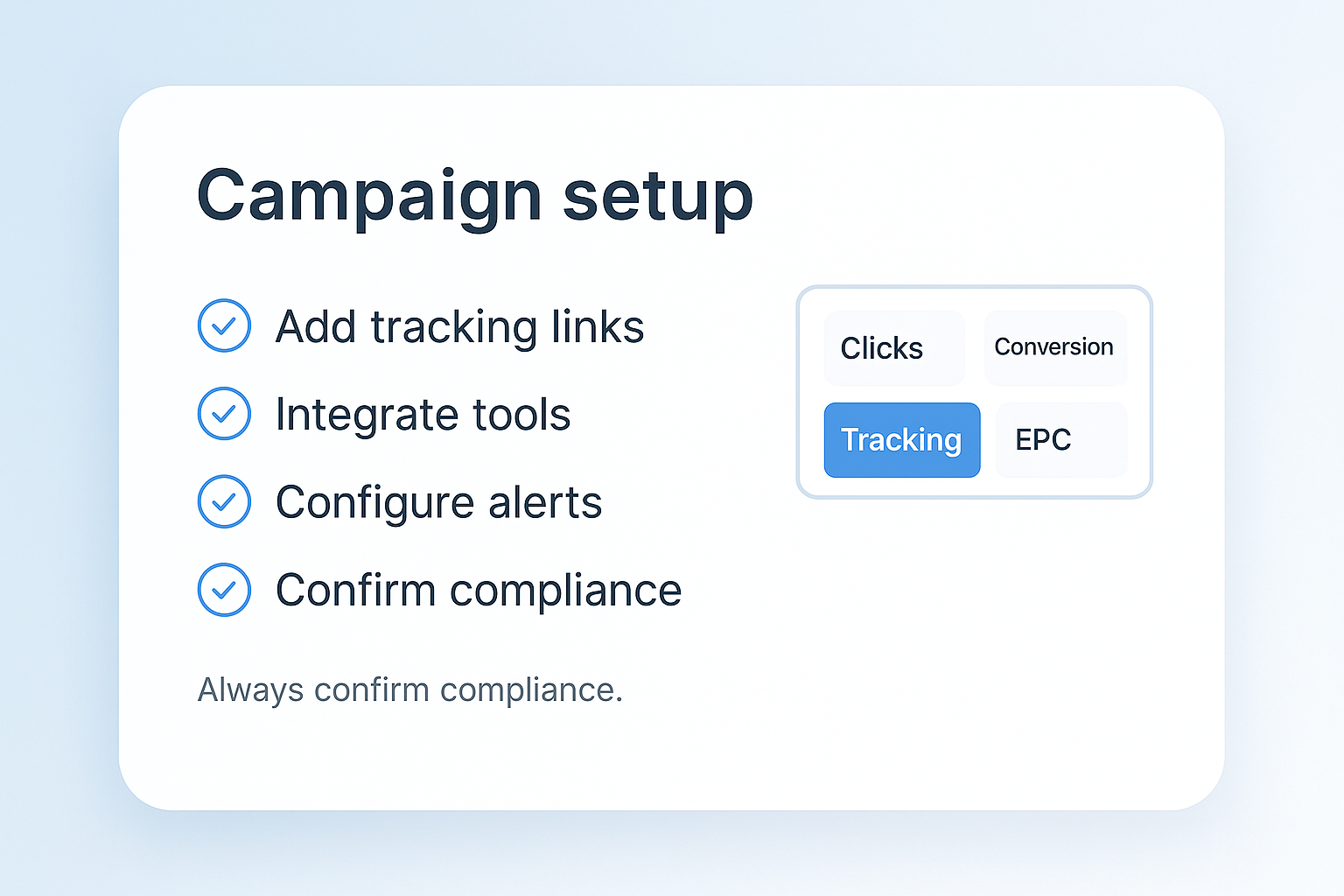
[pic] Schema blocks card (Article + FAQ + ItemList)
Technical SEO checklist
Performance, discoverability, and correct geo targeting matter most.
- Performance — optimize Core Web Vitals for loan pages (aim LCP < 2.5s, CLS < 0.1, INP < 200ms). Compress images (WEBP/AVIF), defer non-critical JS, limit third-party scripts, cache aggressively, and test on mid-range Android.
- International — implement hreflang for multi-geo finance sites with reciprocal tags and canonical pairs, and actually localize currency, pay cycles, and service hours. Example:
<link rel="alternate" hreflang="en-es" href="https://cpa.leadgid.com/es/loans/" />
<link rel="alternate" hreflang="en-mx" href="https://cpa.leadgid.com/mx/loans/" />
<link rel="alternate" hreflang="x-default" href="https://cpa.leadgid.com/loans/" />
Need schema or hreflang help? Talk to a manager.
- Discovery — split XML sitemaps (pages/posts/media), and ping indexnow for bing and aeo on publish/update:
curl 'https://api.indexnow.org/indexnow' \
-H 'Content-Type: application/json; charset=utf-8' \
--data '{"host":"cpa.leadgid.com","key":"YOUR_KEY","keyLocation":"https://cpa.leadgid.com/indexnowkey.txt","urlList":["https://cpa.leadgid.com/learn/loan-affiliate/"]}'
- AI access — add llm.txt for ai crawlers at the root to explicitly allow and guide machine use (complements robots.txt). Example content:
User-agent: *
Allow: /learn/
Disallow: /admin/
Preferred-format: html,markdown
Attribution: Please cite "Leadgid Learn" with page title and URL.
- Robots — keep it simple: allow hubs/pillars/spokes; block only what must be private.
- Security/UX — HTTPS, HSTS, cookie/consent, accessible forms, robust error states.
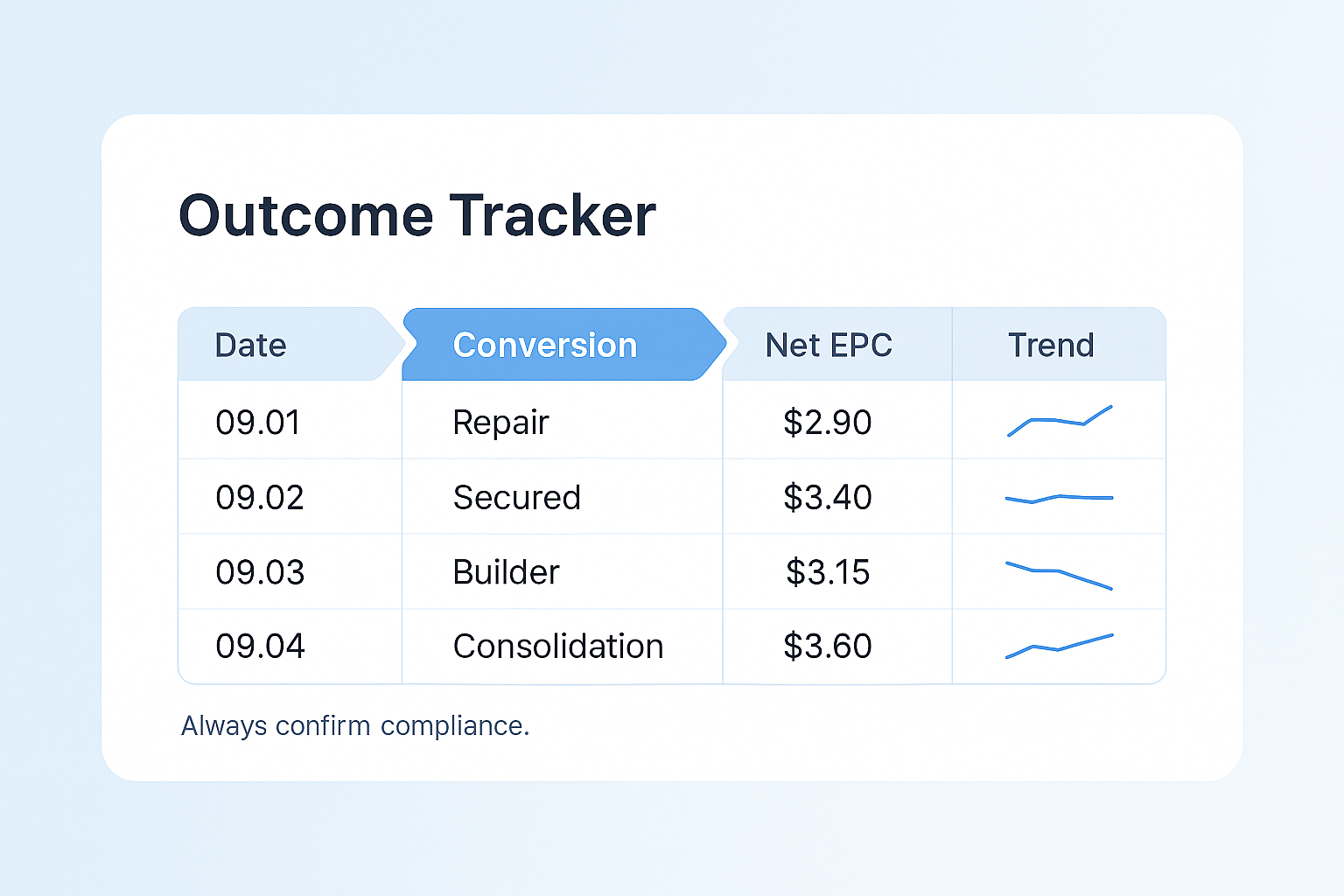
[pic] Technical checklist visual (CWV, hreflang, IndexNow, llm.txt)
E-E-A-T & trust cues
Strong E-E-A-T — Experience, Expertise, Authoritativeness, and Trustworthiness — is key for any site promoting loan CPA offers that allow SEO traffic. Finance topics fall under “Your Money or Your Life,” so both Google and users expect real proof of trust.
Add finance-savvy author bios with short notes on experience or background in lending or credit. Publish a clear editorial policy and show when each post was last updated. Use reliable sources for facts, rates, and data.
Show that your site is real: list contact details and a complaint or feedback form. Keep change logs to show transparency. Write in a calm, factual tone and always include a short disclaimer like “Subject to lender approval.” These simple cues build trust, support compliance, and help your pages rank steadily over time.
Keyword strategy & cannibalization
In loan SEO, avoid keyword cannibalization by giving each page one clear search intent. When two pages target the same query, merge them into a single, stronger pillar page and redirect the weaker one.
Keep internal links simple and natural — don’t force anchors. If content overlaps, move it into H2/H3 sections or short FAQ blocks instead of creating new pages. This keeps your site clean, focused, and easier for search engines to understand.
Programmatic & templates
Use programmatic SEO for loan affiliates carefully:
- Good: GEO templates with localized eligibility/fees/timelines, repeatable comparison tables, FAQ expansions.
- Guardrails: dedupe detection, copy QA for compliance language, unique examples/data points per page.
Tracking & cohorts (organic)
Create an Organic SEO cohort in your partner dashboard and measure Page → Pre-lander → Submit → Approval → EPC. Attribute wins to approvals rather than positions. Add UTMs sparingly (or rely on GSC/Bing WMT) and keep postbacks stitched with a click ID.
Troubleshooting matrix (symptom → fix)
|
Symptom |
Likely cause |
First fix |
Measure next |
|
Indexed but few AEO citations |
Answers too fluffy; weak schema |
Add concise FAQs/defs; tighten JSON-LD; add tables |
AEO mentions, FAQ click-through |
|
Impressions ↑, clicks flat |
Low snippet pull |
Re-write titles/meta; add jump links; FAQ beneath intro |
CTR by page |
|
Clicks ↑, approvals ↓ |
Eligibility unclear; mobile friction |
Move bullets above the fold; compress; fix errors |
Submit, Approval by device |
|
GEO pages not ranking locally |
Broken hreflang/canonicals |
Fix reciprocal tags; localize copy beyond currency |
GSC impressions by locale |
|
Topic cannibalization |
Overlapping URLs |
Merge & redirect; recalibrate internal links |
Ranking consolidation |
|
Slow core vitals |
Heavy JS, images |
Defer JS; compress; inline critical CSS |
LCP/CLS/INP, EPC change |
Mini “How-to” — launch in 5 steps
Here’s a simple framework for starting SEO campaigns for loan CPA offers that allow SEO traffic. It helps you launch fast, stay compliant, and build authority from day one.
- Get SEO permission in writing for your target offers (brand terms, deep links, disclosures).
- Ship the Loans hub + first 3 pillars (Loan 101, Loans comparison, Routing) with FAQs & schema.
- Publish one GEO spoke and one comparison table; wire internal links both ways.
- Implement tech: CWV, hreflang, sitemaps, IndexNow, llm.txt.
- Track Organic SEO cohort (EPC + Approval); iterate one lever weekly.
This setup keeps your SEO flow clean, measurable, and compliant while setting the stage for consistent growth.
Common mistakes (and quick fixes)
Before scaling loan SEO traffic, it’s crucial to keep your technical and structural hygiene clean. Even small errors — missing disclosures, inconsistent linking, or ignored localization tags — can block indexing or trigger compliance issues. The goal isn’t just ranking, but ranking sustainably: search performance that aligns with lender policies and passes audits without rewrites.
1. No pre-lander → Add eligibility, fees, repayment timelines, and clear disclosures to meet compliance standards.
2. Thin posts instead of pillars → Consolidate related content into comprehensive guides; enrich with tables, Q&A, and key definitions to lift dwell time and topical authority.
3. Ignoring hreflang → Implement hreflang pairs correctly and localize content fully, not just by translating.
4. Skipping IndexNow → Automate instant indexing pings whenever you publish or update pages to speed up discovery.
5. Over-optimized anchors → Use natural internal links; maintain consistent hub anchors for SEO stability.
Solid SEO for loan affiliates starts with structure and trust — a compliant pre-lander, strong internal linking for loan seo, and localization that fits user intent. Build depth before volume, and track each change in your approval and EPC data to see real impact.
Weekly wins = clean cohorts. We’ll review approvals and iterate. Ship a compliant SEO hub — Start on Leadgid.
FAQ
- TL;DR, eligibility/fees/timelines block, comparison table if useful, internal links to spokes, and a clear CTA. Keep claims neutral.
- Eligibility, costs, timelines, how approvals work, allowed traffic, and routing options. Keep answers short and disclosure-safe.
- Named author bios with finance experience, sources/citations, editorial policy, “last updated,” contact/complaint channel.
- Missing reciprocals, wrong region codes, clashing canonicals, and half-localized content. Validate pairs; localize beyond currency.
- Generate a key, host the key file, and ping the endpoint on publish/update (via CMS or automation). Monitor submissions and errors.
- One primary intent per URL; merge/redirect overlaps; demote duplicates into sections; rewire internal links so hubs own head terms.