
Commission models in financial services are not just a pricing choice. They define who carries risk, how fraud is controlled, and whether acquisition costs align with real business value. In retail, the difference between CPA and CPL often comes down to preference. In finance, it can determine whether a program scales—or quietly loses money. Long decision cycles, regulated claims, approval and funding steps, and strong fraud incentives make commission models a strategic lever, not an operational detail.
This article explains how CPA, CPL, and CPS work in financial marketing, where each model triggers in the funnel, how to price them, and how to choose the right one for your product.
Why commission models matter in financial services
Finance is fundamentally different from most performance marketing verticals. A click does not mean intent. A lead does not mean eligibility. Even an application does not mean value. Real value often appears days or weeks later, after underwriting, KYC, funding, or policy issuance.
The core challenge is aligning payouts with real value—approved or funded customers—rather than early-funnel volume. Commission models shift risk between advertiser and partner. The earlier you pay, the more risk you absorb. The later you pay, the more pressure you put on tracking and validation.
This balance is especially important when you consider how financial affiliate publishers operate and monetize traffic. Their revenue models, traffic costs, and tolerance for delayed payouts directly influence which commission structures are viable. If you want to understand the publisher side in detail, see Who are financial affiliate publishers and how they make money.
Quick definitions: CPA vs CPL vs CPS
Before going deeper, it’s important to clarify what these models mean in a financial context, not in generic affiliate marketing.
|
Model |
Trigger event |
Proof required |
Who carries risk |
Best use cases |
|
CPL |
Qualified lead captured |
Valid form + criteria |
Advertiser |
Early funnel testing, lead gen |
|
CPA |
Defined acquisition action |
Approval / account open |
Shared |
Core finance acquisition |
|
CPS |
Completed sale outcome |
Funded / issued |
Partner |
High-confidence, mature funnels |
One-line warnings
-
CPL: high exposure to low-intent or incentivized leads
-
CPA: requires clean tracking and unambiguous definitions
-
CPS: vulnerable to chargebacks and long validation windows
Where each model triggers in a financial funnel
Financial funnels have more steps than ecommerce funnels, and where you pay matters.
Typical finance funnel
-
Click
-
Lead capture
-
Application start
-
Application submitted
-
Approval
-
Funded / first deposit / policy issued
This is why “CPA” can mean very different things. One program pays for an application submit. Another pays only for a funded account. Both call it CPA, but the economics are completely different.
Common payout triggers by product
-
Credit cards: approved application
-
Personal loans: approved or funded loan
-
Insurance: policy issued (sometimes after call)
-
Brokerage / investing: funded account or first trade
All of this must be defined explicitly in contracts and offer terms. Ambiguity here leads to disputes later.
CPL: what qualifies as a lead and how to price it
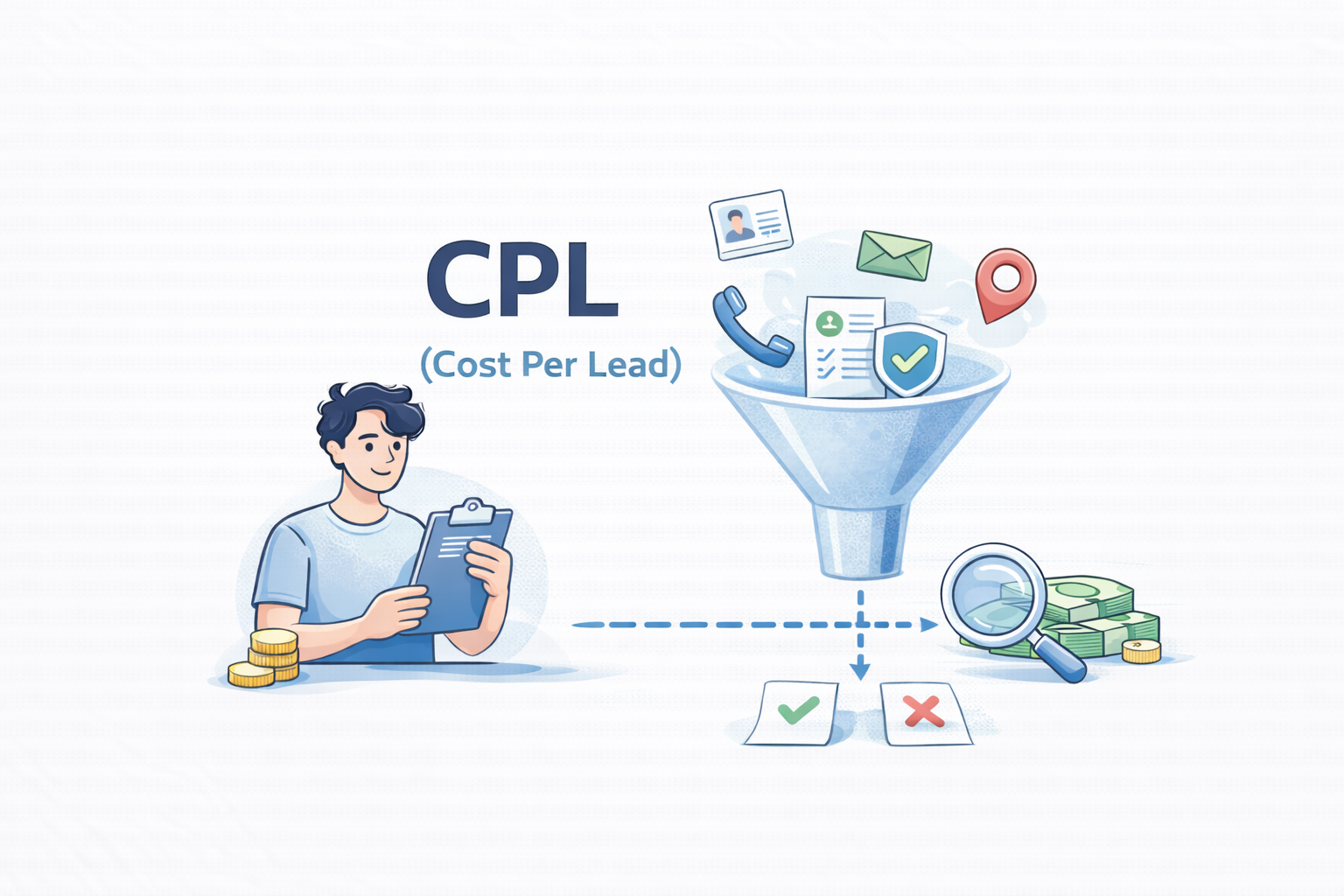
CPL is the earliest and riskiest model in finance. It only works when “lead” is defined tightly.
Qualified lead criteria usually include
-
mandatory fields (name, phone, email, income, etc.
-
contact validation (phone/email format and reachability)
-
geo, age, and eligibility filters
-
explicit consent and disclosures
Lead acceptance rules
-
deduplication across time windows
-
fraud and velocity checks
-
disposable or masked email filtering
-
mismatch detection (geo, IP, data conflicts)
Pricing logic
CPL pricing must reflect downstream performance, not form completion.
Formula
Target CPL = Allowable CAC × Lead-to-Customer Conversion Rate
Worked example (personal loans)
-
Allowable CAC: $200
-
Lead → funded loan rate: 10%
Target CPL = $200 × 0.10 = $20
If approval or funding rates drop, CPL must drop too—or the model breaks.
CPA: the most common finance model
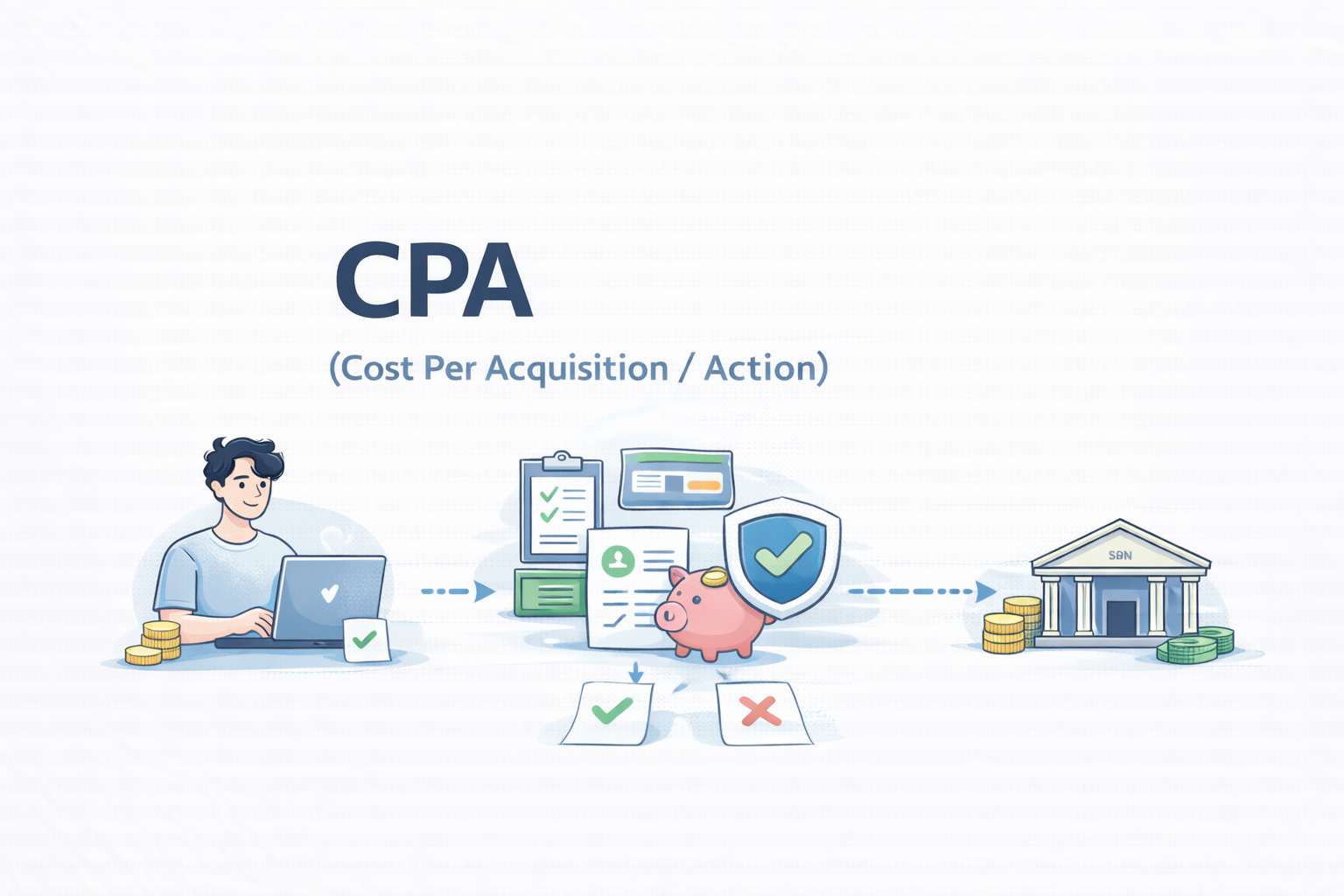
CPA is the dominant performance model in finance because it aligns payment closer to value.
Common CPA actions
-
completed application
-
approved application
-
opened account
-
first deposit
-
funded loan
-
issued policy
Pros
-
better value alignment than CPL
-
reduced low-intent volume
-
clearer ROI attribution
Cons
-
requires robust tracking
-
longer validation windows
-
more operational overhead
Operational mechanics
-
validation and review windows
-
reversals and fraud checks
-
daily or monthly caps
-
delayed payout schedules
Mini example (bank account)
-
CPA = $120 per funded account
-
Validation window = 30 days
-
Payout after funding confirmation
CPS: when “sale” means funded or issued outcomes
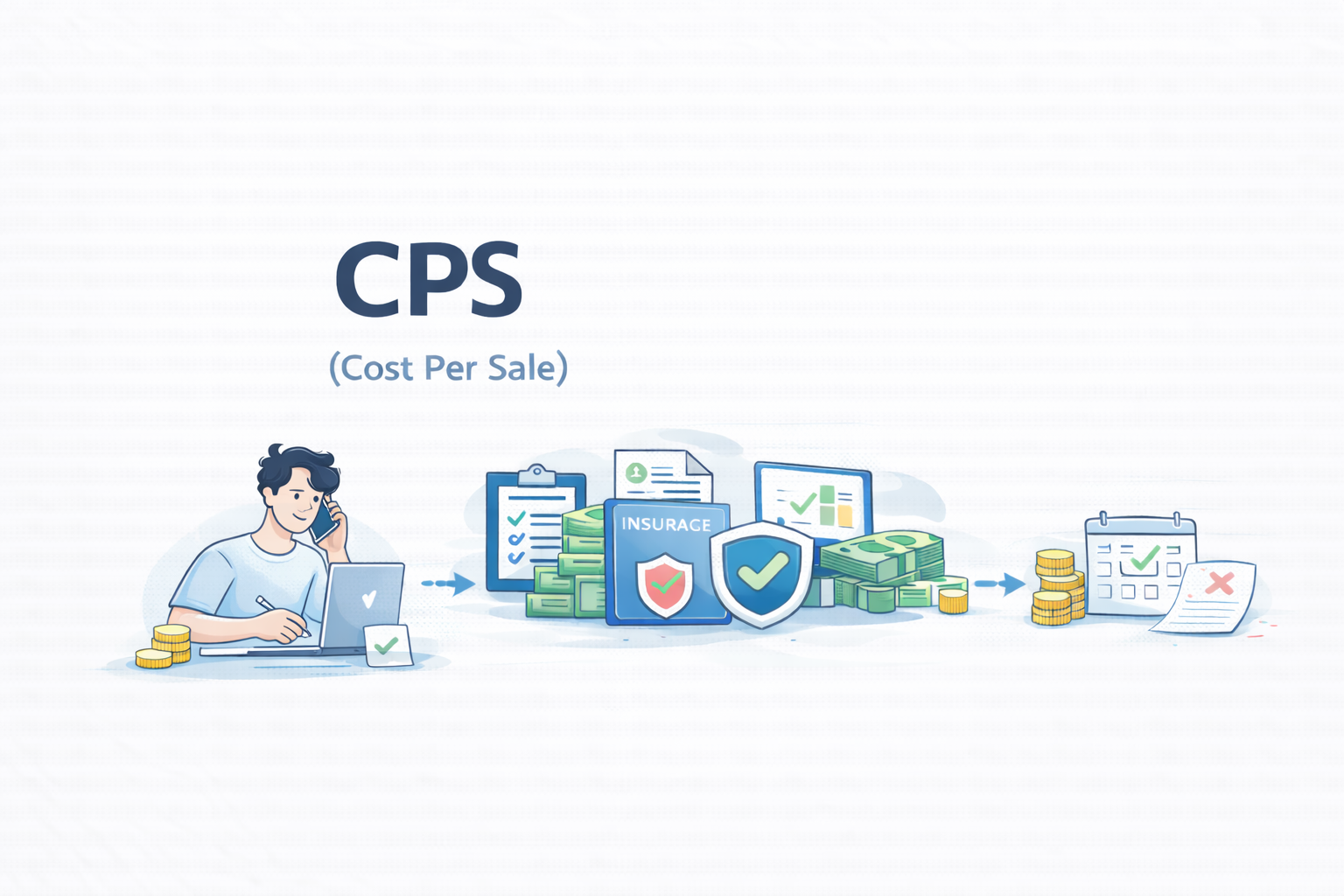
In finance, a “sale” is rarely instant.
What CPS usually means
-
funded loan
-
issued insurance policy
-
funded brokerage account
-
paid financial subscription
CPS can be fixed or revenue share based.
When CPS makes sense
-
strong tracking and reconciliation
-
low fraud exposure
-
predictable cancellation behaviour
Chargebacks and cancellations
-
early churn
-
rescission periods
-
non-payment or default
These are handled via clawbacks, often 30–90 days after the initial event.
Mini example (insurance)
-
CPS = $150 per issued policy
-
Cancellation window = 45 days
-
Cancelled policies are clawed back
Measuring results: KPIs that matter (and how to compare models)
Raw CPL or CPA numbers are misleading in isolation. Finance programs must normalize performance.
Core KPIs
-
eCPL (effective CPL)
-
eCPA (effective CPA)
-
approval rate
-
funded / issued rate
-
CAC
-
LTV:CAC
-
payback period
-
reversal rate
Normalization logic
-
convert CPL and CPS into eCPA
-
compare models on cost per funded / issued customer
Tracking basics
-
pixels for upper funnel
-
server-to-server postbacks for approvals and funding
-
call tracking for voice channels
-
deduplication across channels
Choosing the best model: a decision matrix
|
Criterion |
CPL |
CPA |
CPS |
|
Tracking depth |
Low |
Medium–High |
High |
|
Sales cycle |
Short |
Medium |
Long |
|
Fraud exposure |
High |
Medium |
Low–Medium |
|
Compliance risk |
Medium |
Medium |
High |
|
Partner maturity |
Low |
Medium |
High |
|
Cash-flow tolerance |
High |
Medium |
Low |
Rule of thumb
-
Start with CPL to test supply
-
Move to CPA to scale quality
-
Use CPS when value is fully measurable
Common finance-specific pitfalls (and how to avoid them)
Ambiguous definitions
→ Define “lead” and “acquisition” in measurable terms
Low-intent or incentivized traffic
→ Enforce validation rules and QA sampling
Compliance issues
→ Prohibit misleading rate or pre-approval claims, enforce disclosures
Tracking gaps
→ Test conversions, reconcile events, document attribution logic
Most payout disputes are tracking or definition problems—not partner malice.
FAQ
- The difference is where payment triggers in the funnel and who carries risk. CPL pays early, CPS pays late, CPA sits in between.
- Because many leads never pass underwriting or funding, creating misaligned incentives
- Not always. CPA requires reliable tracking and may limit supply early on.
- Convert both to effective CPA (eCPA) based on funded or approved outcomes.