
A CPA offer's attractiveness to affiliates comes down to four factors: payout rate, approval rate, landing page quality, and contract terms. Get any one of these wrong, and traffic moves to a competing offer — no matter how strong the other three are.
Here's the scenario that plays out constantly: an advertiser lists an offer on a CPA network, sets the payout above market average, and traffic still doesn't show up. The reason is usually one of these four factors, not the rate itself. Affiliates (see How the Market Works: Who Are Affiliates for more on who they are and how they operate) see hundreds of offers in their vertical, and they don't pick the one that simply exists — they pick the one that actually converts and doesn't create headaches along the way.
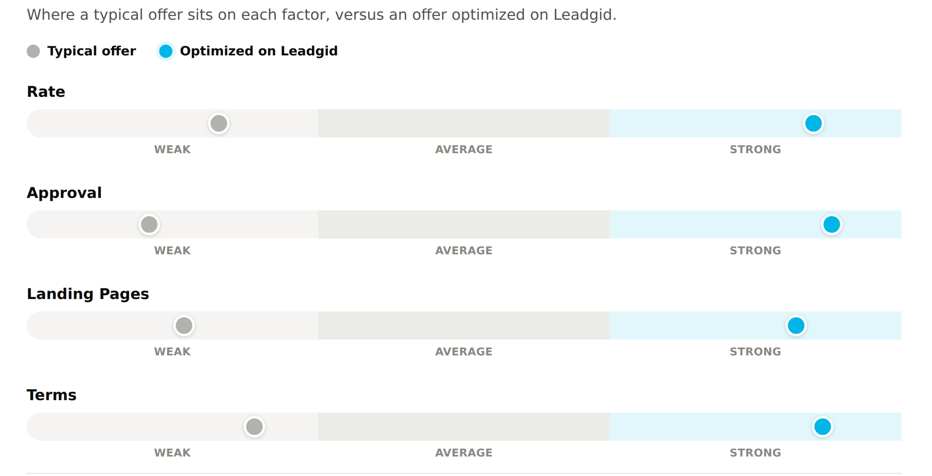
Weak Offer vs. Attractive Offer, at a Glance
|
Factor |
Weak offer |
Attractive offer |
|
Payout rate |
Below market, or "starting rate" that changes later |
Matches market rate for the vertical/GEO, fixed in writing before launch |
|
Approval rate |
Unstable, no reason given for rejections |
Stable, with a specific reason attached to every rejected lead |
|
Landing pages |
One generic page for every GEO |
Localized per GEO, mobile-optimized, refreshed regularly |
|
Terms |
Long hold, vague caps, surprise clawbacks |
Reasonable hold, clear caps, transparent clawback policy — all agreed upfront |
What Payout Rate Makes an Offer Attractive?
An attractive payout rate is one that's justified and predictable, not necessarily the highest number on the page. The rate is the first thing an affiliate looks at, but it's rarely the deciding factor on its own.
-
The rate matches the market average for the vertical and GEO, not lowballed "for a trial period"
-
A transparent payout scale if the rate depends on lead quality or volume
-
Clear payout currency and schedule, with no surprises after the fact
-
Room to negotiate custom terms for high-volume traffic sources
On Leadgid: rates are locked in and discussed with your account manager during onboarding, before launch — affiliates see the final number, not a "starting" figure that changes later.
Why Does Approval Rate Matter More Than the Rate Itself?
Approval rate matters more than the payout rate because it determines an affiliate's actual earnings, not just the price tag per lead. Approval rate is the share of leads that ultimately get confirmed and paid. In practice, an offer with a high rate but a low approval rate loses to an offer with an average rate and a high approval rate — affiliates calculate real earnings from their traffic, and they do that math fast.
-
Realistic approval criteria, set in advance and not changed mid-flight
-
Fast confirmation or rejection — delays freeze an affiliate's cash flow and erode trust
-
A specific reason for every rejected lead, not a generic explanation
-
Stable approval rates over time, without sudden unexplained drops
On Leadgid: approval stats are available in real time, broken down by rejection reason — affiliates see exactly what's happening with their traffic instead of guessing.
How Do Landing Pages Affect Offer Performance?
Landing pages determine whether an affiliate can actually convert the traffic they send you, regardless of how good the rate and approval numbers look on paper. A high-quality offer with a generic, unlocalized landing page still fails to convert.
-
The landing page is localized for the specific GEO — language, currency, and local trust signals (reviews, licenses, local payment methods)
-
Fast load times and proper mobile rendering — most traffic in this space comes from mobile
-
Multiple landing page and pre-lander variants for different traffic sources, not one generic version
-
Creatives refreshed regularly, so the audience doesn't burn out on the same offer
On Leadgid: advertisers who supply localized landing pages for each GEO and refresh creatives consistently pull in more traffic — affiliates redirect budget toward whatever's easier to sell.
What Contract Terms Do Affiliates Actually Care About?
Affiliates care most about the terms that affect their cash flow and predictability: hold periods, caps, and clawback policy. These are often buried in the fine print, but they decide whether an affiliate sticks with an offer long-term.
-
A reasonable hold period (the wait before payout after a lead is confirmed) — too long a hold scares off affiliates who need working capital
-
Clear caps (daily or weekly lead limits) with no sudden stops on incoming traffic
-
A transparent clawback policy — if a lead is later marked invalid, the affiliate should understand why
-
Approved traffic sources spelled out upfront, so affiliates don't lose already-spent budget to surprise restrictions
On Leadgid: caps, hold periods, and clawback terms are locked into the agreement at the start — affiliates plan their traffic volume knowing exactly what they're working with for the life of the offer.
The Bottom Line
An offer's attractiveness isn't one metric — it's four factors an affiliate weighs together: how much they'll earn (rate), how much they can trust the numbers (approval), how easy the offer is to sell (landing pages), and how predictable the partnership will be (terms). If even one of these slips, traffic moves to a competitor — even if the other three are perfect.
If you're still choosing the network itself rather than optimizing an offer within one, start with the checklist: How to Choose a CPA Network: A Checklist for Advertisers.
FAQ
- Approval rate. Affiliates calculate actual earnings from their traffic, not the nominal rate — an offer with an average rate and high approval outperforms a high-rate offer with low approval, and affiliates work that out fast.
- Usually a few days of testing on a small volume of traffic is enough to gauge approval rate, landing page conversion, and payout reliability. If the numbers don't add up by then, traffic shifts to another offer.
- Identify the reason immediately and communicate it to affiliates — changed approval criteria, a spike in invalid applications from a specific GEO, a tracking glitch. Silence costs more than an honest explanation: affiliates forgive a temporary dip far more readily when they understand the cause and can see it's being fixed.
- Not on its own. A high cap with an unstable approval rate or a long hold period still loses to a smaller, well-run offer — affiliates weigh cap size against how reliably they'll actually get paid.