
If you wonder 'Can I use SEO for payday loan traffic?', then yes-if the specific offer allows SEO. Always check the Allowed traffic field and run a compliant flow: intent page → pre-lander (eligibility, fees, timelines, disclosures) → offer. Use permissioned lists, platform-safe wording, and keep evidence of consent, policies, and approvals.
Key takeaways
- Offer-level rules: Policies vary by offer and GEO; treat “Allowed traffic” as the source of truth.
- Pre-lander → approvals: Clear eligibility and cost/timeline notes reduce denials and complaints.
- Use your real channel: Prefer loan CPA offers that allow SEO/Email traffic (don’t force a disallowed source).
- Compliance is copy + process: No promise language, keep consent logs, save policy PDFs/screens.
- Iterate with evidence: Track Impr → CTR → Pre-lander CR → Submit → Approval → EPC and review “denial reasons” weekly.
What “Allowed traffic” means (and why it’s offer-specific)
Starting at fundamentals, “Allowed traffic” sets which sources you can use and under what conditions.
Typical statuses
- Allowed: Source is permitted as described.
- Restricted: Conditions apply (e.g., pre-lander required, GEO-limited SEO, email only for existing subscribers, social copy templates).
- Disallowed: Source not permitted.
Common conditions
- Pre-lander required (with eligibility bullets + disclosures).
- No trademark/brand bidding unless you have explicit written approval.
- Content requirements (e.g., rate/fee phrasing, disclaimers, T&Cs links).
- Channel-specific constraints (e.g., no lookalikes for certain audiences).
Run compliant loan flows on Leadgid - Sign up.
SEO for loan offers - safe playbook
- Target informational/intent queries (“how short-term loans work in [GEO]”, “installment vs payday”).
Common question: do I need a pre-lander for loan offers? - usually yes. Use it to pre-qualify:
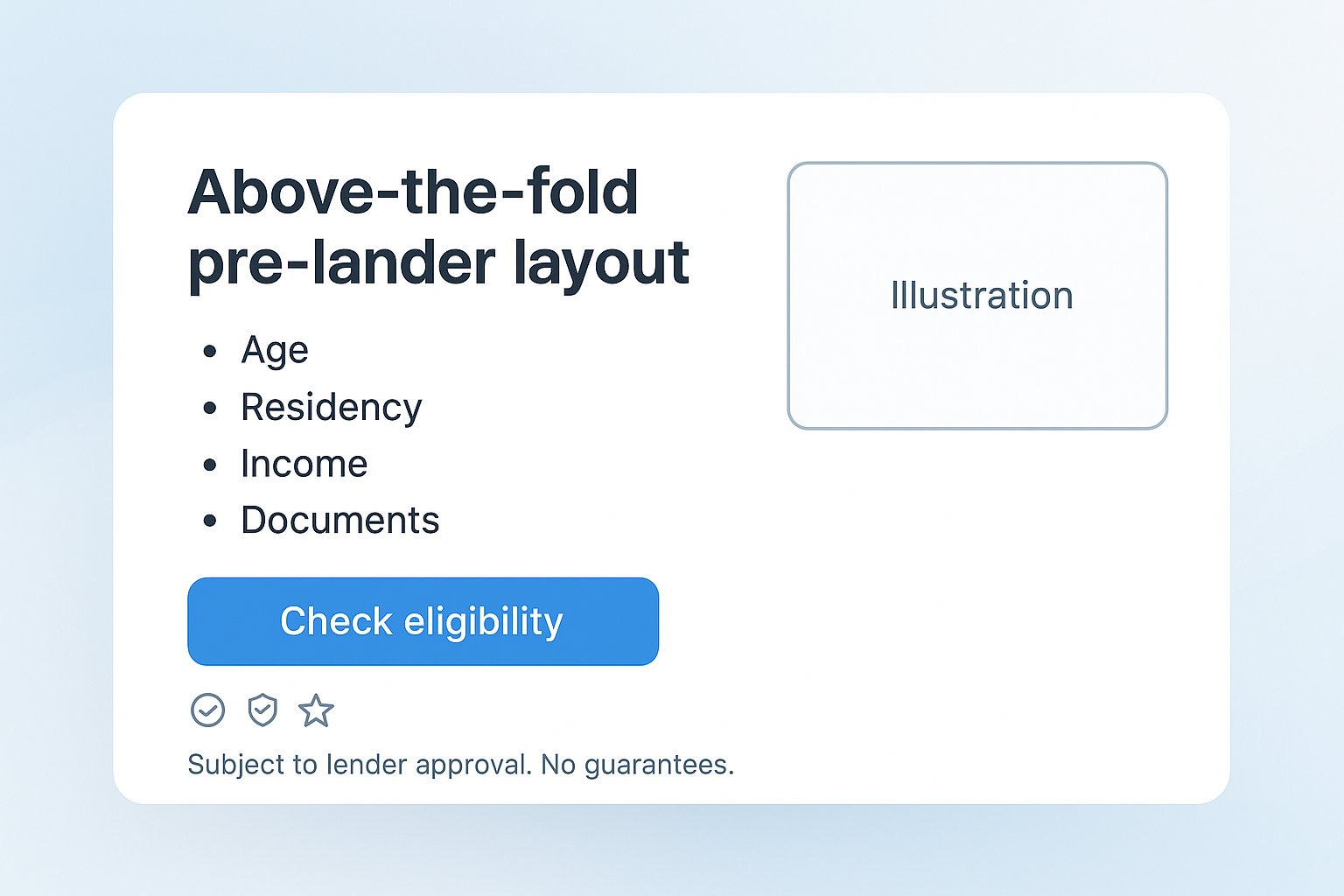
- Eligibility bullets: age, residency, income, employment.
- Costs & timelines: plain-language fees, repayment cadence, late-fee risks.
- Disclosures: “subject to lender approval,” links to lender T&Cs, responsible-borrowing note.
- Technical hygiene: fast mobile pages, clear CTAs, structured data (FAQPage) for extractable answers.
Common question: brand bidding and loan affiliate offers, allowed or not? Typically no. Use generic/intent keywords unless the offer explicitly approves brand terms in writing. Explore deep dives into SEO and payout terms as well.
In SEO any detail matters. For example, a PH SEO test saw approvals improve when disclaimers were above the CTA.
Email - permissioned only (compliance basics)
- Email compliance for finance affiliates, tips on using:
- Use opt-in lists (record timestamp/source/IP); no scraped/bought lists.
- Clear sender, physical address (where required), and 1-click unsubscribe.
- Avoid deceptive subjects and promise language; be specific and educational.
- Flow: short education sequence → pre-lander → offer.
- Suppress non-engagers; document consent and suppression events.
Social / UGC - wording & disclosure basics and Facebook policy for loan ads 2025
- Use short, educational posts/videos; link-in-bio → pre-lander.
- Add disclosures (affiliate) where required; keep overlays/captions compliant.
- Platform rules change; keep a living doc of examples your manager approved.
Tips on Facebook policy:
- Always verify on the official policy page before launch
- Avoid guarantee language
- Target responsibly
- Expect extra review in finance.
Pre-lander & disclosure checklist
Must-have elements
✅ Eligibility bullets (age/residency/income/employment).
✅ Fees & timelines explained in plain language.
✅ “Subject to lender approval” disclaimer; no “guaranteed/instant approval”.
✅ Links to lender T&Cs and your privacy/consent notes.
✅ Responsible-borrowing reminder (budget impact, late-fee risk).
✅ Contact/support info and local service hours (where relevant).
Have us review your pre-lander - Talk to a manager.
Evidence & QA - stay audit-ready
- Save screenshots/PDFs of the offer’s Allowed traffic and copy rules.
- Maintain a change log (date, what changed, who approved).
- Keep consent evidence (email): timestamp, source, IP.
- Capture approval reasons weekly → update eligibility copy/targeting.
- Use UTMs + postbacks/API for cohort checks (source/geo/device).
Mini “How-to” - launch in 5 steps
- Pick one GEO & one offer; confirm allowed traffic for loan CPA offers 2025 in writing (and save it).
- Build the pre-lander; add eligibility, costs/timelines, disclosures; run it past your manager.
- Launch one permitted channel and one angle; no brand/trademark bidding without explicit approval.
- Measure: Impr → CTR → Pre-lander CR → Submit → Approval → EPC; fix the weakest link first.
- Weekly review with your manager; change one lever at a time (copy, targeting, device UX, offer). If policy blocks your channel, pick and switch offers, not rules.
And remember: Before any launch, confirm Allowed traffic in your offer and send your pre-lander for manager review.
Policy matrix - confirm before launch
|
Item to confirm |
SEO |
|
Social/UGC |
Notes |
|
Allowed / Restricted / Disallowed |
☐ |
☐ |
☐ |
Offer- and GEO-specific |
|
Pre-lander required |
☐ |
☐ |
☐ |
Use approved template if provided |
|
Brand bidding allowed? |
☐ |
- |
☐ |
Usually no; need explicit written approval |
|
Sample compliant wording |
☐ |
☐ |
☐ |
Keep a copy-bank; manager-approved examples |
|
Disallowed claims list |
☐ |
☐ |
☐ |
“Guaranteed”, “Instant”, “No checks ever” |
|
Sensitive audience rules |
☐ |
☐ |
☐ |
Platform & GEO variations apply |
|
Tracking & disclosures |
☐ |
☐ |
☐ |
UTMs, consent logs, T&Cs, privacy links |
Tip: Print this matrix for each offer. Don’t go live until every box is answered and stored.
Common mistakes (and quick fixes)
- No written policy.
Fix: request & save Allowed traffic confirmation and any channel caveats.
- Direct-linking without education.
Fix: add a pre-lander with eligibility + disclosures.
- Promise language.
Fix: replace with eligibility/estimate phrasing; add “subject to lender approval”.
- Brand bidding by default.
Fix: avoid unless explicitly approved; use generic/intent keywords.
- Unpermissioned email.
Fix: permissioned lists only; document consent and suppression.
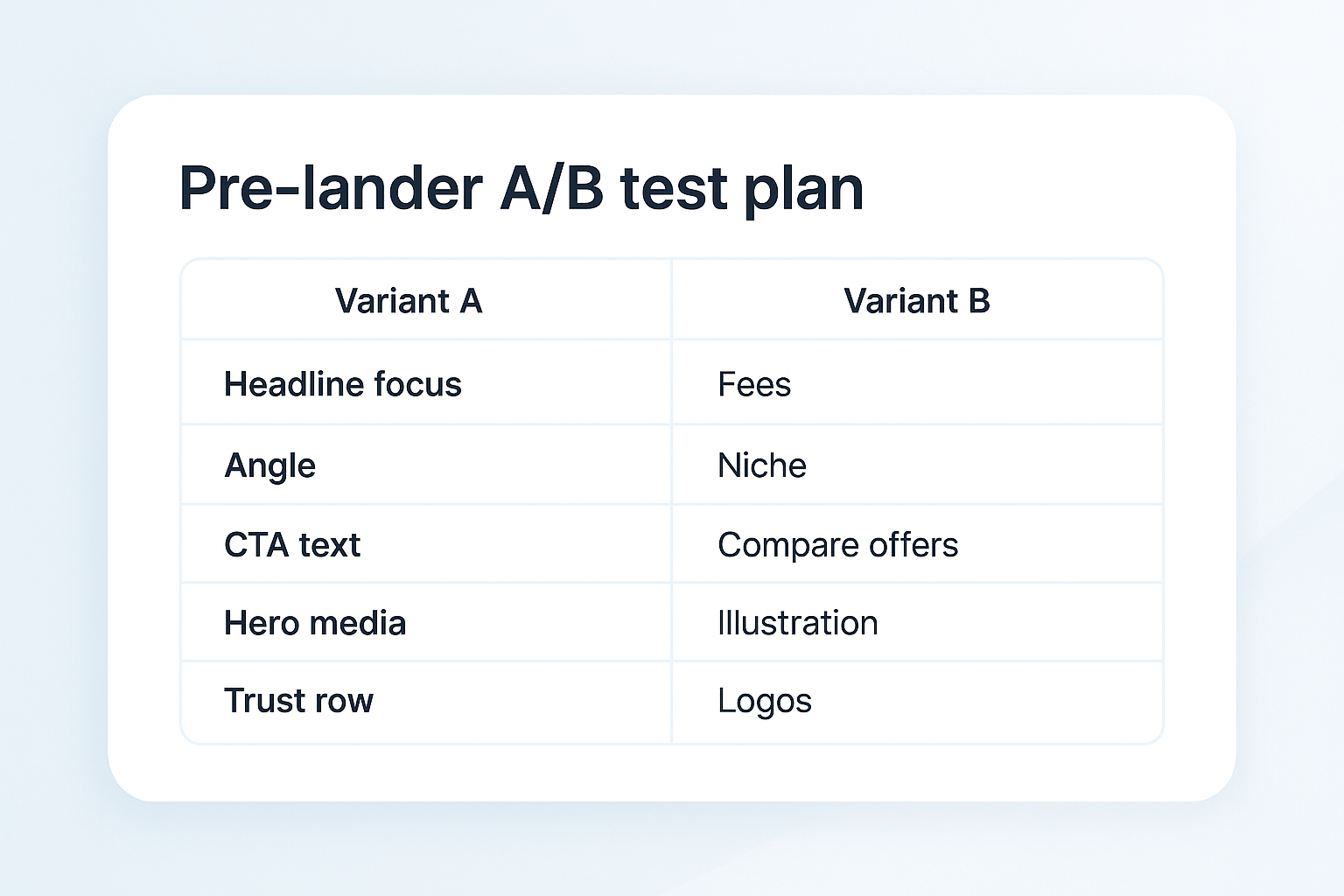
- Testing many variables.
Fix: one channel, one GEO, one angle for 7–14 days; then iterate.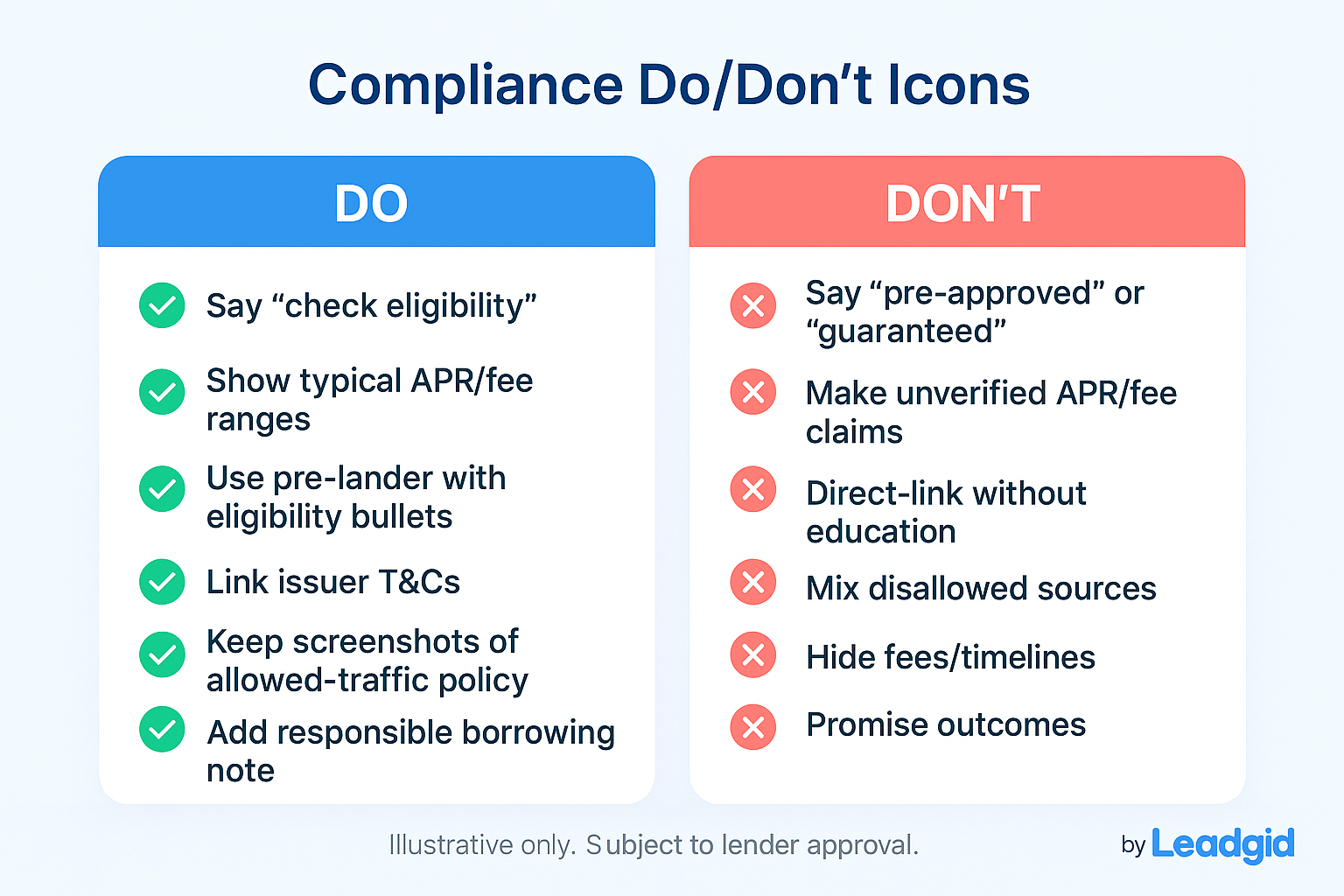
Summary
SEO can be an effective traffic source for payday loan offers-but only if it’s explicitly allowed for the campaign you’re running. Always double-check the Allowed traffic field and follow a compliant funnel: intent page → pre-lander (eligibility, fees, timelines, disclosures) → offer. Use verified opt-ins, clear policies, and maintain evidence of user consent and compliance at every step.
Offer rules differ by GEO and advertiser, so treat each offer’s terms as the definitive guideline. A strong pre-lander with transparent eligibility details and repayment timelines not only improves approval rates but also minimizes user complaints. Always work with your real, approved channel-if SEO isn’t permitted, choose Email or Native placements that are.
Remember: compliance is not just copy-it’s documentation. Avoid misleading claims, keep consent logs, and store proof of your compliance materials. Review your funnel metrics regularly (Impressions → CTR → Pre-lander CR → Submit → Approval → EPC) and use data to refine your flow.
In short, the answer to “can I use SEO for payday loan traffic?” is yes-but only when you’re following the rules, documenting every step, and optimizing responsibly.
Ready to launch? Start with an offer that explicitly allows your channel; we’ll help verify policies and optimize.
FAQ
- Yes-if the specific offer permits SEO. Use an intent page → pre-lander → offer; avoid promise language and keep disclosures clear
- They exist but are offer-specific. Confirm permissions in writing and follow any pre-lander or copy requirements.
- It varies by offer/GEO. Check if SEO, email, or social is Allowed, Restricted (conditions), or Disallowed, and whether a pre-lander is required.
- Usually recommended or required. It increases approvals by setting expectations and filtering in-profile users.
- Generally no, unless explicitly approved in writing. Use generic/intent keywords instead.
- Always verify the current official policy before launch; finance ads face stricter review. Avoid guarantees, target responsibly, and add clear disclosures.