TL;DR
-
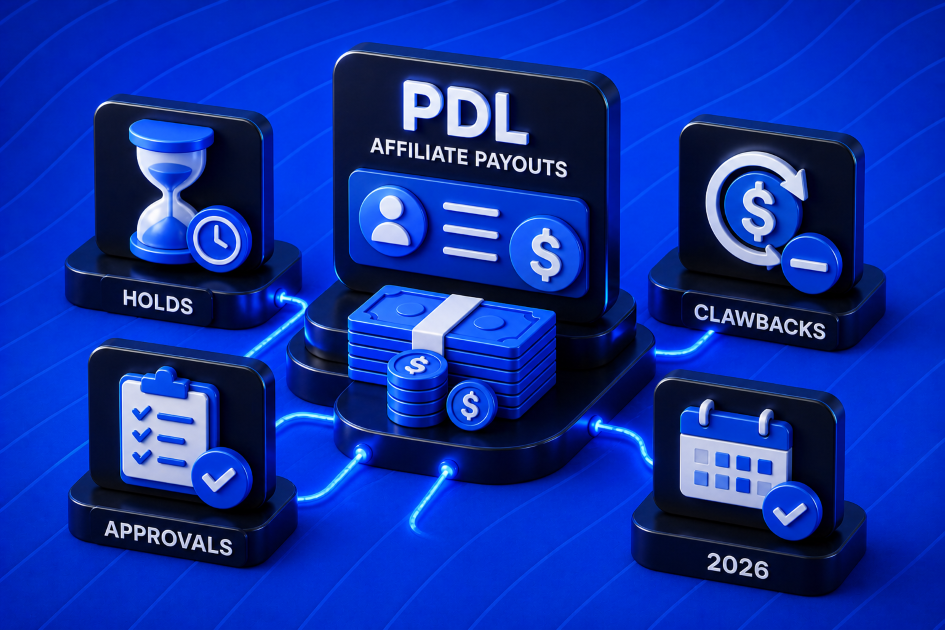
You don't get paid per submitted application. You get paid per approved application. The difference is massive.
-
Hold periods are 7-30 days. This is the advertiser waiting to see if the loan goes bad. You don't get paid during the hold.
-
Clawbacks are real. 5-20% of approved leads get clawed back because the customer defaulted, returned the loan, or charged back. You lose the payout.
-
Approval rate matters more than CPL. A $2 CPL at 10% approval is worse than a $5 CPL at 30% approval. The second one pays 7.5x more.
-
Real timeline: 30-60 days from lead submission to cash in hand. Not because fraud, but by design: 7-30 day hold + payment schedule (usually 2×/month).
-
CPAL, not CPL, is your real metric. Cost Per Approved Lead. That's what you actually divide budget by.
Why PDL payouts are structured this way
Before we get into the mechanics, it helps to understand why lenders built it like this.
A payday loan is short-term high-risk credit. The lender doesn't care if someone applies. They care if someone gets funded and repays. The affiliate gets a commission only when the loan is approved - which means:
-
Submitted application ≠ credit decision (10-60% approval rate across geos)
-
Approval ≠ funded (some approvals expire, customer doesn't fund)
-
Funded ≠ repaid (default rate is 15-40% depending on geo)
If we paid you per submitted application, we'd be subsidizing their credit losses. So the entire payout structure is built to align your incentive with theirs: you profit when they profit.
That's also why holds exist. The lender needs time to see if the loan goes bad before paying you.
Hold periods explained
A hold period is the waiting time between loan approval and payout release.
How long are holds?
|
Advertiser type |
Typical hold |
Why |
|
Large regulated lender (EU, licensed MFI) |
7-14 days |
They have capital, can absorb early defaults, fast repayment in 7-10 days |
|
Mid-size fintech (Tier-2 focused) |
15-21 days |
Standard industry practice to catch short-term defaults |
|
Smaller or higher-risk lender |
30 days |
Longer cycle to see early repayments and defaults. Some push to 45-60 days. |
|
Installment loans (60+ day terms) |
30-60 days |
Waiting for first or second payment before confirming no immediate default |
What the hold is NOT
A hold is not the advertiser "looking for fraud" or "verifying your leads." They're already doing that during the application flow. A hold is the lender watching their loan performance. If 30 customers take loans and 10 default in the first week, the lender knows their loss and can calculate the actual revenue from that affiliate's traffic.
Can you negotiate shorter holds?
Yes, but only if you have volume and a clean conversion history.
-
New affiliates: 15-30 days, non-negotiable
-
Volume affiliates (10k+/month): 10-14 days, sometimes negotiable
-
Scale affiliates (50k+/month): 5-10 days, usually negotiable or automatic
Some advertisers also have "performance-based holds" — if your traffic converts and repays well for 60 days, they drop it to 7 days automatically. Ask your manager.
Approval rate: the number that actually matters
Most new affiliates fixate on CPL (cost per lead submitted). This is a mistake.
You get paid on approved leads, not submitted applications.
Realistic approval rates by GEO
|
GEO / Vertical |
Typical approval rate |
Why it varies |
|
Tier-3 (BD, PH, NG, ID) — PDL |
12-18% |
Low income, high rejection. Lender risk-averse. |
|
Tier-2 mid (VN, ZA, BR) — PDL |
18-25% |
Better credit infrastructure, higher lender approval appetite |
|
Tier-2 top (PL, KZ, ES) — PDL |
22-32% |
Regulated markets, credit bureau checks work, lender confident |
|
Tier-1 (US, UK) — PDL |
25-40% |
Strong credit bureau, lender can verify income reliably |
|
MFI (all tiers) |
28-45% |
Micro loans are higher approval — less underwriting, smaller risk per loan |
|
Credit cards (Tier-1) |
18-30% |
Stricter than PDL/MFI, more regulatory hoops |
Key insight: these are baseline rates. Your actual rate depends on:
-
Traffic source quality (organic search = higher approval than pop-traffic)
-
Pre-lander (if you qualify users before sending to form, approval goes 3-5x higher)
-
Time of day / day of week (weeknight applications have better approval than weekend)
-
Device (desktop > mobile for credit approval odds, counterintuitive but true)
The CPL vs. CPAL math
This is the most important distinction in PDL affiliate economics:
-
CPL = Cost Per Lead submitted. You pay this upfront (via traffic cost or direct).
-
CPAL = Cost Per Approved Lead. You calculate this: total spend ÷ approved leads.
Example:
|
Metric |
Affiliate A |
Affiliate B |
|
Traffic cost |
$1,000 |
$1,000 |
|
Leads submitted |
500 |
200 |
|
CPL (what you paid) |
$2 |
$5 |
|
Approval rate |
15% |
35% |
|
Approved leads |
75 |
70 |
|
CPAL (what you really paid) |
$13.33 |
$14.29 |
|
Advertiser payout per approval: $15 |
Profit: $1.67 per approval |
Loss: -$0.71 per approval |
Affiliate A spent half as much per lead but has a 15% approval rate, meaning a CPAL of $13.33. Affiliate B has a $5 CPL but 35% approval rate, CPAL of $14.29. At $15 payout, A is barely profitable ($1.67 margin). B is unprofitable.
This is why approval rate is the lever that moves profitability more than CPL.
Clawbacks: when you lose money after getting paid
A clawback is when the advertiser takes back money they already paid you.
This happens when:
-
The customer defaults on the loan within 14-30 days
-
The customer initiates a chargeback through their payment method
-
The customer returns the loan (some lenders allow "voluntary return" in first 24-72 hours)
-
Fraud is detected (rare if you're legitimate, but it happens)
How much do you lose to clawbacks?
Clawback rates vary by GEO and lender:
|
GEO / Risk profile |
Typical clawback rate |
Why |
|
Low-risk (EU regulated, Tier-1 credit cards) |
3-7% |
Good credit bureau data, strong customer verification |
|
Medium-risk (Tier-2 PDL, regulated MFI) |
8-15% |
Some default risk, acceptable loss rates |
|
Higher-risk (Tier-3, high-traffic volume, mobile-only) |
15-25% |
Weak credit infrastructure, high default, bot-click risk |
Clawbacks in real scenarios
Scenario: You send 100 leads at a PDL offer with a 28% approval rate (28 approved leads).
Breakdown:
-
27 customers fund and keep the loan
-
1 customer defaults in week 2 and is clawed back
Clawback rate: 3.6% of approved leads, or 3.6% of what you earned. If payout was $15/approval = $420 gross. You keep $404 net. This is normal and expected.
Higher-risk scenario: Tier-3 traffic, high volume, bot-like patterns. Advertiser sees:
-
100 leads, 20% approval (20 approved)
-
12 fund and repay
-
8 default / chargeback / return
Clawback rate: 40% of approved leads. You submitted 100 leads, got paid for 20, now 8 clawed back. Real net: 12 profitable leads on 100 submissions.
This is why traffic quality matters more than volume.
Can you reduce clawbacks?
Yes:
-
Pre-qualify on the pre-lander: add questions about employment, existing debt, etc. Defaults drop 20-40% when you qualify.
-
Target employed, salaried users: contract workers and gig-economy have higher default rates.
-
Avoid high-risk payment methods: some lenders are cautious about prepaid card funding.
-
Send traffic at lower bid (avoid bots): high-volume bot traffic has clawback rates 2-3x higher.
Real payout timeline: when you actually see money
The full journey of a lead
|
Day |
Event |
Your status |
|
Day 0 |
Customer submits application |
Lead counted, hold period starts |
|
Day 1-3 |
Application reviewed, approved or rejected |
Still in hold if approved |
|
Day 4-10 |
Loan funded (if approved) |
Lender watching for immediate defaults |
|
Day 15-30 |
End of hold period |
If no default yet, you're "earned" |
|
End of month or 1st/15th |
Payment schedule release |
Money in your account |
|
Day 30-60 (total) |
Total time from lead to cash |
Ready to spend or reinvest |
Payment schedules
Most networks (including Leadgid) pay 2×/month on standard terms:
-
1st of month: earnings from 1-15 previous month
-
15th: earnings from 16-30/31 previous month
Some networks offer weekly or immediate payout for high-volume affiliates, but standard is 2×/month.
Payment methods (depending on your GEO and KYC status):
-
SEPA wire (EU) — 1-3 business days
-
ACH / wire (US) — 1-5 business days
-
Crypto (USDT, Bitcoin) — 30 min to confirm
-
Capitalist / e-wallet — instant to next business day
-
PayPal — 1-3 days (if not restricted)
The real math: worked example
Let's say you're running PDL-Poland and test a new channel with $2,000 budget.
Campaign inputs
|
Traffic cost |
$2,000 |
|
Leads submitted |
800 |
|
CPL (your cost) |
$2.50 |
|
Approval rate |
24% |
|
Approved leads |
192 |
|
CPAL (real cost) |
$10.42 |
|
Advertiser payout per approval |
$14 |
Gross revenue (before holds and clawbacks)
192 × $14 = $2,688
Gross profit (before clawbacks): $2,688 - $2,000 = $688 (34% ROI)
After 21-day hold + clawbacks
Day 22, the hold releases. But advertiser discovers clawbacks:
-
5 customers default (2.6% clawback rate)
-
Clawed back: 5 × $14 = $70
Final net payment: $2,688 - $70 = $2,618
Real profit: $2,618 - $2,000 = $618 (31% ROI after clawbacks)
Timeline to cash
-
Leads submitted: Day 1
-
Hold released: Day 22 (21-day hold)
-
Payment generated: Day 22 (pending next payout schedule)
-
If submitted on the 10th, you get paid on the 15th (5 days)
-
If submitted on the 20th, you wait until 1st of next month (11 days)
-
Total from lead to cash: 22-33 days in this scenario
How to optimize payouts
1. Prioritize approval rate over CPL
A $1 cheaper CPL isn't worth it if approval drops 10%. Calculate your CPAL, not just CPL.
2. Build a pre-lander with qualifying questions
Pre-landers that ask about employment and existing debt lift approval rate 2-3x and reduce clawbacks 15-30%.
3. Target employed, salaried users
Self-employed, gig-economy, and "odd jobs" users have 2-3x higher default rates. Refine your targeting.
4. Negotiate shorter holds at volume
At 10k+ leads/month with good conversion history, ask for 10-14 day holds instead of 30. Saves 2-3 weeks of working capital.
5. Use sub-IDs to track approval by source
If you run multiple channels, ads, or creatives, tag each with a sub-ID. You'll find that some sources deliver 18% approval while others hit 32%. Scale the high-approval sources.
6. Watch clawback trends
If clawback rate suddenly jumps from 5% to 15%, it signals traffic quality drop. Might be bot traffic, wrong GEO, or time-of-day effect. Investigate and adjust.
Common mistakes affiliates make with PDL payouts
-
Optimizing only for CPL, ignoring approval rate. A cheaper lead at 12% approval will always lose to a pricier lead at 30% approval.
-
Not accounting for holds in cash flow planning. 30-day holds mean your money is tied up. Budget for 6-8 weeks of burn before profitability.
-
Surprised by clawbacks. Clawbacks are normal (5-20%), not fraud. Budget for them.
-
Submitting low-quality traffic and expecting high approval. Bot clicks, VPN traffic, and known fraud rings approve at 2-5%. Real users approve at 15-35%.
-
Not negotiating better terms at scale. If you're running 50k leads/month, your hold should be 7 days and clawback should be 3-8%, not 30 days and 15%.
-
Mixing GEOs in tracking. PL approval is 25%, BR is 20%, PH is 14%. If you lump them together, you can't optimize each one.
Key takeaway
PDL affiliate payouts aren't broken - they're designed to align your incentive with the advertiser's. You make money when the lender makes money.
The holds, clawbacks, and approval-based payouts might feel like friction compared to "pay per click," but they actually protect you. You're not burning budget on applications that will never convert or customers who will default in week 1.
Master approval rate (not CPL), understand your CPAL, and budget for the 30-60 day cash flow cycle. That's how profitable PDL affiliates operate.
If you have questions about specific offers, holds, or payment terms, your Leadgid manager has the answers — and will negotiate on your behalf if you have the volume. Ask.
Related reading
FAQ
- A hold is the time between loan approval and payout release, usually 7-30 days. During this time, the lender watches the loan to see if the customer defaults. If they do, you get clawed back.
- A clawback is when the advertiser withdraws a payout because the loan defaulted, was returned, or charged back. They typically happen 7-30 days after approval. Clawback rates range from 3-25% depending on GEO and traffic quality.
- Because the advertiser only profits if the loan is approved and repaid. If we paid per application, we'd subsidize their credit losses. This alignment also protects you — you're not paying for invalid leads.
- Shorter is better for your cash flow, but lenders set holds based on their loss tolerance. Shorter holds (7 days) mean more default risk is borne by the lender. Longer holds (30 days) mean they're more confident in their underwriting. You can't really choose — it's set by the advertiser.
- CPL = Cost Per Lead submitted (your upfront cost). CPAL = Cost Per Approved Lead (total spend ÷ approved leads). CPAL is the real number that matters because you only get paid on approvals. If you spend $1,000 on 500 leads and 100 approve, your CPAL is $10.
- Typically 30-60 days from lead submission. Holds range 7-30 days, then you wait for the next payment schedule (usually 1st and 15th of month). If you submit on the 20th, you wait until the 1st of next month.
- Tier-2 PDL: 18-28%. Tier-1 (US, UK): 25-40%. MFI: 28-45%. It depends on your traffic quality — organic search approves higher than pop traffic. Pre-qualified traffic (with pre-lander) can hit 35-50%